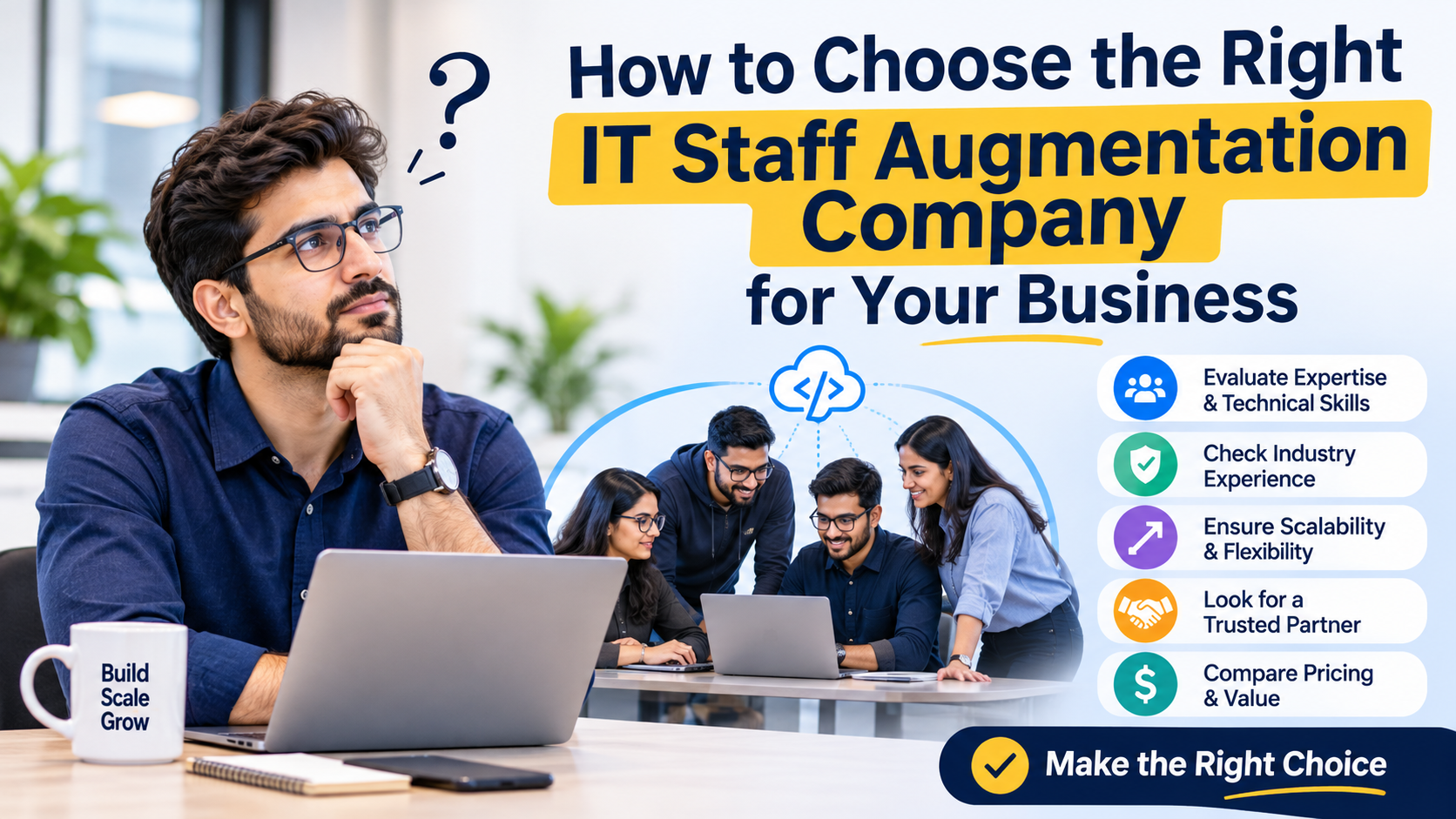
How to Choose the Right IT Staff Augmentation Company for Your Business
Choosing an IT staff augmentation company is an important decision for any business that needs additional technology capacity. The right partner can help a company add skilled developers, reduce delivery pressure, and access specialised expertise without building a permanent team for every short-term requirement.
The wrong partner can create new problems. Poor technical matching, weak communication, unclear security responsibilities, and low-quality delivery can cost more time than the original talent gap.
For this reason, businesses should look beyond hourly rates and the size of a provider’s talent pool. A reliable IT staffing partner should understand the client’s technology stack, evaluate candidates properly, communicate clearly, and support the external professional after the engagement begins.
What does an IT staff augmentation company do?
An IT staff augmentation company helps businesses add external technical professionals to their existing teams for a defined period. The professionals may work on software development, cloud, DevOps, AI, data, cybersecurity, mobile applications, QA automation, or other technology initiatives.
Unlike a fully managed outsourcing provider, a staff augmentation partner usually does not take complete ownership of the client’s product or project. The client normally controls the roadmap, priorities, technical decisions, workflows, and acceptance criteria.
The external developers work as an extension of the internal team. They may join daily stand-ups, use the client’s project tools, contribute to the client’s repositories, participate in code reviews, and follow the organisation’s engineering standards.
This model is useful when a company has internal technical leadership but needs more capacity or a specialist skill for a specific project phase.
Why is choosing the right partner important?
Staff augmentation is not simply a process of receiving résumés. The partner influences the quality of the people introduced, the speed of onboarding, the clarity of communication, and the level of support available during the engagement.
A poor match can create delays because the developer needs too much training or does not understand the project’s architecture. Weak communication can lead to misunderstandings about requirements and delivery expectations. Inadequate security processes can expose systems, code, or sensitive data to unnecessary risk.
A strong partner reduces these risks by making the matching process more specific. It should understand the actual work, the technology stack, the seniority required, the time-zone needs, and the way the client’s team operates.
The goal is not to find the largest number of available candidates. The goal is to find people who can contribute effectively to the client’s work.
Start with your staffing requirements
Before comparing providers, define the problem your business is trying to solve. A company that needs a senior backend engineer for a high-volume platform has a different requirement from a company that needs a QA automation specialist for a product release.
Describe the project, the current team structure, the technology stack, the work that is blocked, and the expected outcome. Include the frameworks, programming languages, cloud platforms, databases, development tools, and deployment environment involved.
The role should also describe the level of ownership required. Some projects need an individual contributor who can complete well-defined tasks. Others require a technical lead who can make architecture decisions, review code, and guide less experienced engineers.
A clear staffing brief helps the provider recommend the right profile. It also makes it easier for the client to evaluate whether a candidate is genuinely suitable.
Evaluate the technical vetting process
Technical vetting is one of the most important factors when selecting an IT staff augmentation company. A provider should be able to explain how candidates are evaluated before they are introduced to a client.
A strong process may include live coding, pair programming, system design, architecture discussions, code review, communication assessment, and role-specific technical interviews. The method should reflect the actual work the candidate will perform.
A developer who claims experience with a framework may still have limited experience maintaining a large production codebase. A cloud engineer may know the names of several platforms but lack experience with reliability, monitoring, or cost control. Practical assessment helps reveal the difference.
Ask whether the client can interview the candidate directly. The final decision should remain with the business because the client understands its product, team culture, architecture, and delivery standards better than any external provider.
Witqualis states that it assesses senior engineers through live architecture and pair-coding evaluations before matching them with clients. This type of assessment should still be discussed in detail so the client understands what is tested and how the result relates to the proposed role.
Check relevant technology and domain experience
A candidate can be technically strong and still be a poor fit for a particular project. Technology experience should be considered alongside business context, project complexity, regulatory requirements, and delivery environment.
For example, an engineer who has built a small internal application may not have the experience required for a high-traffic customer platform. A mobile developer who has built consumer applications may need additional knowledge before working on a regulated healthcare or financial product.
Ask the provider for examples of similar work. Confirm the frameworks, versions, architecture patterns, cloud platforms, databases, testing tools, and deployment methods involved.
Domain experience is also useful when the product includes complex workflows. An engineer who understands the client’s industry may ask better questions and identify risks earlier. However, domain experience should complement technical ability rather than replace it.
Review the communication and collaboration model
Technology delivery depends on communication. A technically capable engineer may still struggle if expectations about working hours, meetings, documentation, code review, and escalation are not clear.
Ask how the external professional will communicate with the internal team. Find out whether they will join stand-ups, planning meetings, retrospectives, technical reviews, and incident discussions where appropriate.
Time-zone overlap can be important for teams that need quick feedback or frequent collaboration. A small amount of overlap may be enough for a focused role, while a product team may need several shared working hours each day.
Witqualis describes direct stand-ups, Jira tickets, Slack communication, and four to eight hours of time-zone overlap as part of its engagement approach. Businesses should confirm the actual working arrangement for the specific candidate and project.
The communication model should also define who manages the day-to-day work. In a staff augmentation engagement, the client usually assigns tasks and sets priorities. The provider may support the relationship, but it should not create confusion about ownership.
Examine the onboarding process
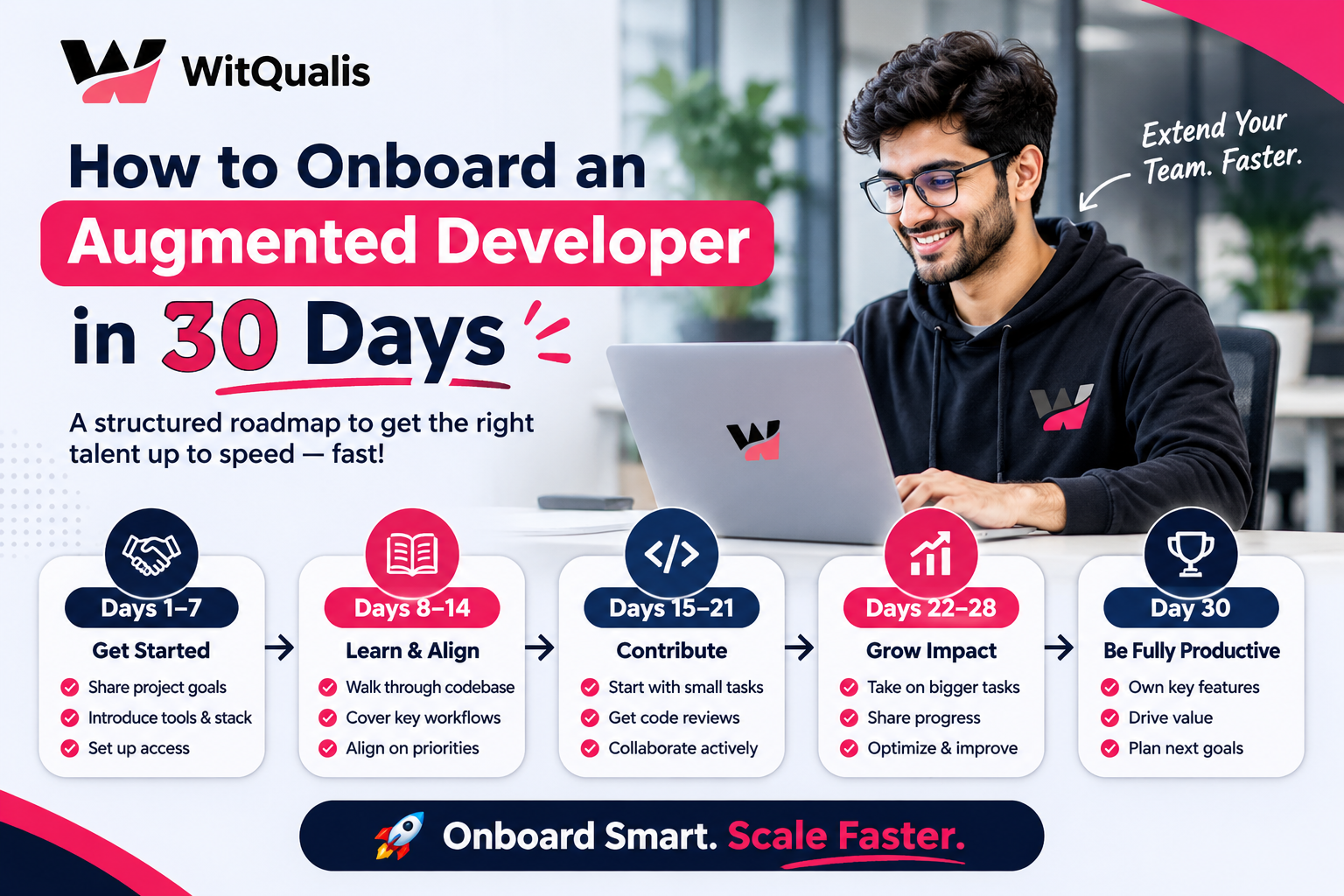
A good onboarding process helps a new developer become productive without creating unnecessary pressure on the internal team.
Ask how the first week is structured. The developer may need access to documentation, repositories, development environments, project boards, communication channels, staging systems, and security procedures.
The client should prepare an onboarding owner who can explain the product, architecture, coding standards, development process, and current priorities. The provider should help make sure the developer has the information needed to start contributing.
Witqualis states that it can match interview-ready candidates within 48 hours and offers a seven-day evaluation sprint before a longer engagement. These are company-stated service claims, so buyers should confirm availability, candidate matching criteria, trial terms, and onboarding responsibilities before committing.
Speed is valuable, but it should not replace quality. A fast onboarding process is useful only when the candidate is a genuine match and the client has a clear plan for the first sprint.
Confirm security and data protection responsibilities
Security should be reviewed before an external professional receives access to systems or information. This is particularly important for AI, healthcare, finance, e-commerce, customer data, source code, and production infrastructure.
The agreement should explain how identities are created, how permissions are granted, how devices are secured, and how access is removed when the engagement ends. Production access should follow the principle of least privilege whenever possible.
The client should also clarify how the developer will handle confidential information, source code, logs, credentials, customer records, and third-party services. If the project uses AI, the business should define which data may be included in prompts or sent to external model providers.
Ask the partner about secure development practices, confidentiality obligations, background checks where relevant, incident reporting, and offboarding procedures. The details should be reviewed by the company’s legal and security teams when the project involves sensitive systems.
A staffing provider does not remove the client’s responsibility for security. Both sides need to understand their roles and maintain appropriate controls throughout the engagement.
Review intellectual property and code ownership
The contract should clearly explain who owns the code, documentation, designs, configurations, prompts, models, and other work created during the engagement.
The client should know where commits will be made, who can access the repositories, and how the work will be transferred if the engagement ends. It should also understand whether the developer may reuse any code, libraries, templates, or materials in other projects.
Witqualis states that commits can be pushed directly to the client’s repositories under standard engagement terms. The business should review the actual agreement to confirm how ownership, access, confidentiality, and reuse are handled.
Clear intellectual property terms help prevent disputes later. They are especially important when the external team works on a proprietary product or an AI system built on private business data.
Ask about trial periods and replacement terms
A trial sprint can help the client evaluate technical quality, collaboration, communication, and delivery behaviour before starting a longer engagement.
The trial should have a clear scope. The client should define the tasks, expected outputs, access limitations, review process, and decision point at the end of the evaluation.
The business should also ask what happens if the fit is not right after the trial. Review replacement policies, notice periods, minimum commitments, billing terms, and the process for resolving performance concerns.
A replacement policy is useful, but prevention is better. The client should provide detailed requirements and conduct its own interview before the developer begins live work.
Compare pricing carefully
Pricing should be evaluated in relation to quality, experience, delivery risk, and the amount of management required from the client.
A lower rate may not provide better value if the developer needs extensive supervision or produces work that requires significant rework. A higher rate may be appropriate when the professional has the seniority and experience needed to solve complex problems independently.
Ask how the price is calculated and what it includes. Clarify whether technical management, replacement support, onboarding, holidays, infrastructure, or administrative services are included in the commercial terms.
The business should also understand how changes in team size are handled. Flexible scaling can be valuable when the project has changing requirements, but the terms should be clear before additional people are added or removed.
The best comparison considers total delivery value rather than the hourly rate alone.
Check scalability and talent availability
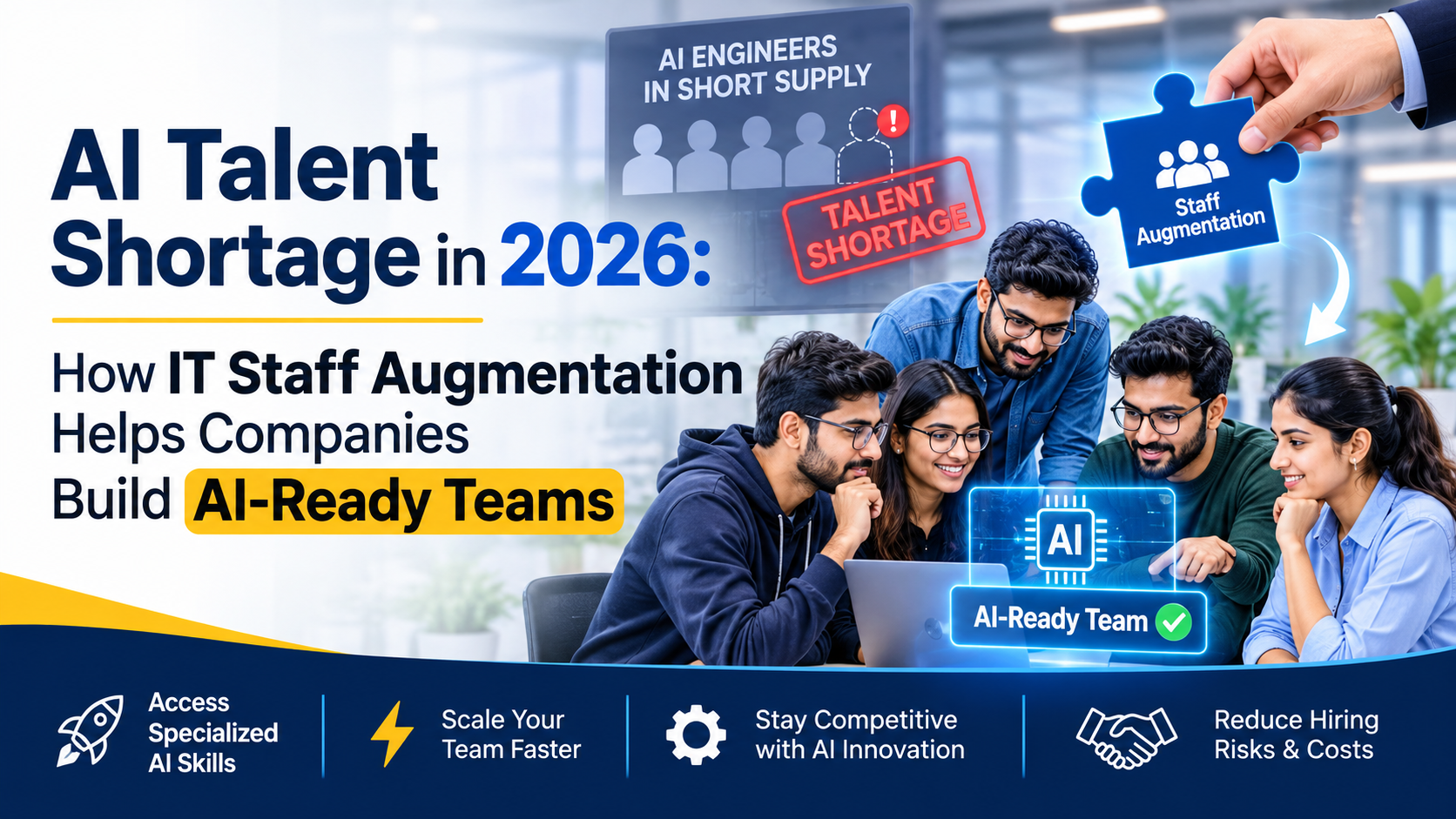
A staffing partner should be able to support the organisation as its needs change. The company may initially need one developer but later require QA, cloud, data, AI, or DevOps expertise.
Ask whether the provider can add complementary skills without disrupting the existing team. It should be able to explain how new candidates are screened and how continuity is maintained when the project grows.
The size of the talent pool is not the only factor. A large network does not guarantee that the right people are available or properly vetted. Relevant availability and matching quality matter more than an impressive headline number.
Witqualis lists dedicated developers and engineering talent across areas including React, Python, Node.js, cloud, cybersecurity, data analytics, AI and machine learning, QA automation, and DevOps. Businesses should confirm the current availability and experience of the specific professionals proposed for their project.
Look for evidence of successful delivery
Case studies, client references, technical profiles, and examples of similar work can help a business evaluate a provider’s credibility.
Ask for evidence that relates to the project rather than generic success stories. A company planning a cloud migration should look for cloud delivery experience. A business building an AI product should ask about data, model integration, evaluation, security, and production operations.
References should cover more than technical quality. Ask about communication, reliability, responsiveness, transparency, and how the provider handled problems.
The provider should be willing to discuss limitations. A partner that promises every skill, timeline, and outcome without asking detailed questions may not be assessing the project carefully enough.
Decide whether staff augmentation is the right model
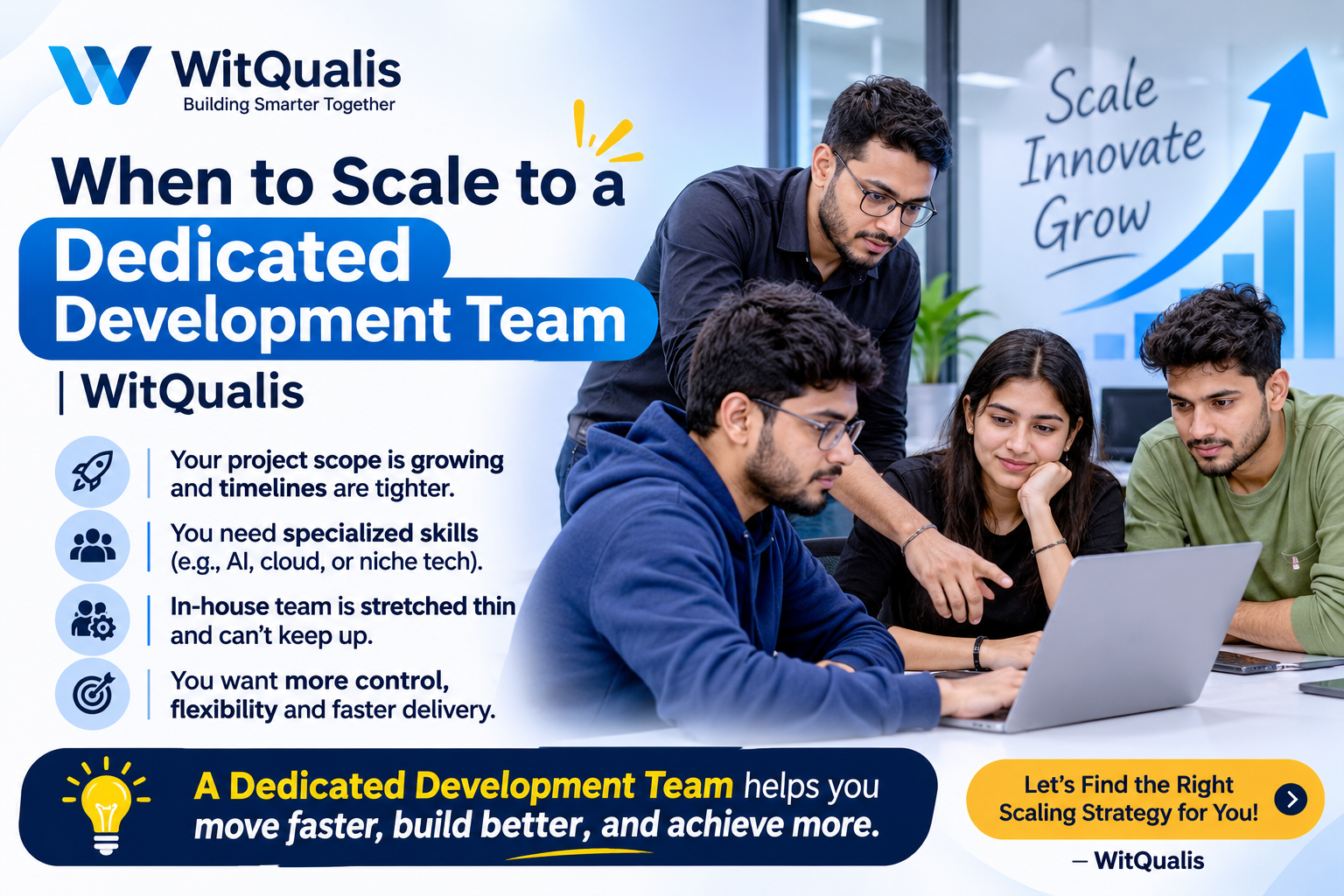
Staff augmentation is useful when the company has internal leadership and wants external professionals to work directly within its team. It is often suitable for changing product roadmaps, specialist requirements, temporary capacity needs, and projects that need close collaboration.
A managed outsourcing model may be more appropriate when the business wants an external provider to own a complete and clearly defined project or service. The distinction should be understood before selecting a partner.
The earlier article
Staff Augmentation vs Outsourcing can help businesses compare control, flexibility, communication, and delivery ownership. If this URL does not exist on the live site, the editorial team should update the link to the published article URL before release.
Why businesses choose Witqualis
Witqualis positions its IT staff augmentation service around pre-vetted senior software engineers who work directly with internal engineering teams. Its public service page describes live architecture and pair-coding assessments, direct workflow integration, a trial sprint, and candidate matching within 48 hours as part of its stated model.
The company lists technical talent across software development, AI and machine learning, cloud, DevOps, data, mobile, cybersecurity, and QA automation. Its dedicated engineering page also describes a four-stage vetting process, technical interviews, daily time-zone overlap, and a seven-day evaluation sprint.
These claims should be evaluated against the specific needs of each project. The most important question is whether the proposed engineer has the technical depth, communication style, availability, and delivery experience required by the client.
A good engagement begins with a clear technical conversation. The client should explain its stack, architecture, roadmap, team structure, security requirements, and expected outcomes. The provider can then recommend a relevant candidate or team rather than presenting a generic list of profiles.
Final thoughts
Choosing the right IT staff augmentation company requires more than comparing prices or reading a list of technologies. Businesses need to evaluate technical vetting, relevant experience, communication, onboarding, security, intellectual property, trial terms, scalability, and delivery evidence.
The right partner should make it easier to add capability without losing control of the product or engineering process. It should help the client find professionals who can contribute to real work, collaborate with internal teams, and support the project’s long-term quality.
Before signing an agreement, define the problem clearly and ask detailed questions about how the engagement will work. A strong staffing partner will welcome that level of detail because precise requirements lead to better matching and better delivery.
If your organisation needs skilled developers or technical specialists, explore Witqualis IT staff augmentation services or dedicated engineering talent.